
The green city
The Man-Made Forest Sandton Sits Inside
Johannesburg is often called the world's largest man-made urban forest. What that means for Sandton, why the city is so green, and where to feel it.
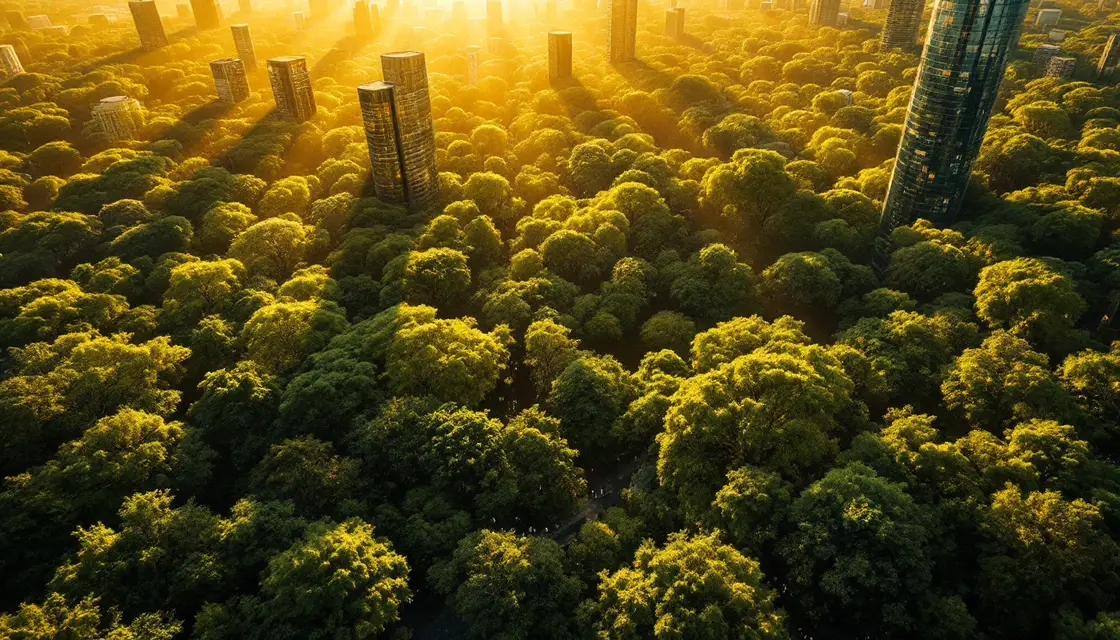
Fly into Johannesburg on a clear day and the thing that surprises first-time visitors is not the skyline, it is the green. From the air the city reads as a forest with towers poking through it, and Sandton sits squarely inside that canopy. Understanding it explains why the precinct feels the way it does at ground level.
A forest that was planted
Johannesburg is often described as one of the largest man-made urban forests on the planet, a city of millions of trees laid down by people rather than nature. The Highveld around the city was open grassland with very little natural forest, so almost every tree you see was planted, first around the early mining town, then across the spreading northern suburbs over more than a century.
The exact tree count gets quoted in different ways and should be treated as an estimate rather than a census, but the scale is real and visible: a dense, continuous canopy over a city that had almost none to begin with.
What it does for Sandton
Sandton grew up inside this canopy, and it is the reason the precinct is greener than its publicity. Walk two streets off the main commercial drag and the towers give way to tree-lined residential roads, shade and birdsong, a world away from the glass-and-tar stereotype.
That canopy is the backdrop to everything we cover under the green city: the landscaped squares in the business core, the public parks on the edges, the sense that the precinct is somewhere you could spend a Saturday and not just a Tuesday deadline.
Why the green is the point
It is tempting to treat the trees as a pleasant footnote to the serious business of a financial district. That gets it backwards. A business node that is only towers and tar is a place people endure; one threaded through a planted forest is a place they choose. The canopy is a large part of why Sandton works as somewhere to live and work, not just to clock in.
The forest was somebody’s long-term decision, made over generations. The precinct is a late beneficiary of it, and the least it can do is notice.
Common questions
Is Johannesburg really a man-made forest?
Johannesburg is frequently described as one of the largest man-made urban forests in the world, with millions of trees planted across the city over more than a century. The region had little natural forest, so the canopy is almost entirely planted.
Why does this matter for Sandton?
Sandton sits inside that planted canopy, which is why its residential streets feel green and shaded despite the dense business core, and why the precinct reads as an urban oasis rather than a bare concrete node.
More from The Pulse
Food and culture
Lunch Under the Towers
How the precinct dines, from Nelson Mandela Square to the rooftops, without the tourist traps.

Working culture
Why Work From Sandton, Not From Home
The spare-room office won the lockdown and quietly stopped working. The honest case for the precinct.

Working culture
The Hybrid Work Network of the Precinct
How to work from the precinct without a lease: memberships, boardrooms, day passes and how to choose.