
Orientation
The Sandton Precinct, Explained
A plain guide to the Sandton precinct: where it is, how it became the business heart of Johannesburg, and what the skyline does not tell you.
- City
- Johannesburg, Gauteng
- Role
- Financial and corporate hub
- Tallest building
- The Leonardo, about 234 m
- Rail link
- Gautrain Sandton station
Ask where the money in South Africa sits and the answer is a single node in the north of Johannesburg. Sandton holds the Johannesburg Stock Exchange, the head offices of most of the country’s large banks, and enough corporate floor space to earn its usual billing as the richest square mile on the continent. That is the Sandton everyone can picture.
It is also the least interesting way to understand the place.
How it got here
Sandton was farmland and low-density suburb until the 1970s, when Sandton City opened and gave the area a commercial centre of gravity. The decisive move came in 2000, when the Johannesburg Stock Exchange relocated from the declining inner city to Sandton. The banks and the corporates followed, and within a decade the node had replaced downtown Johannesburg as the country’s business address.
The skyline followed the money. The Leonardo, completed in 2019 at roughly 234 metres, is the tallest building in South Africa and in Africa, and it reads as the exclamation mark on a precinct that spent twenty years building upward.
The shape of the place
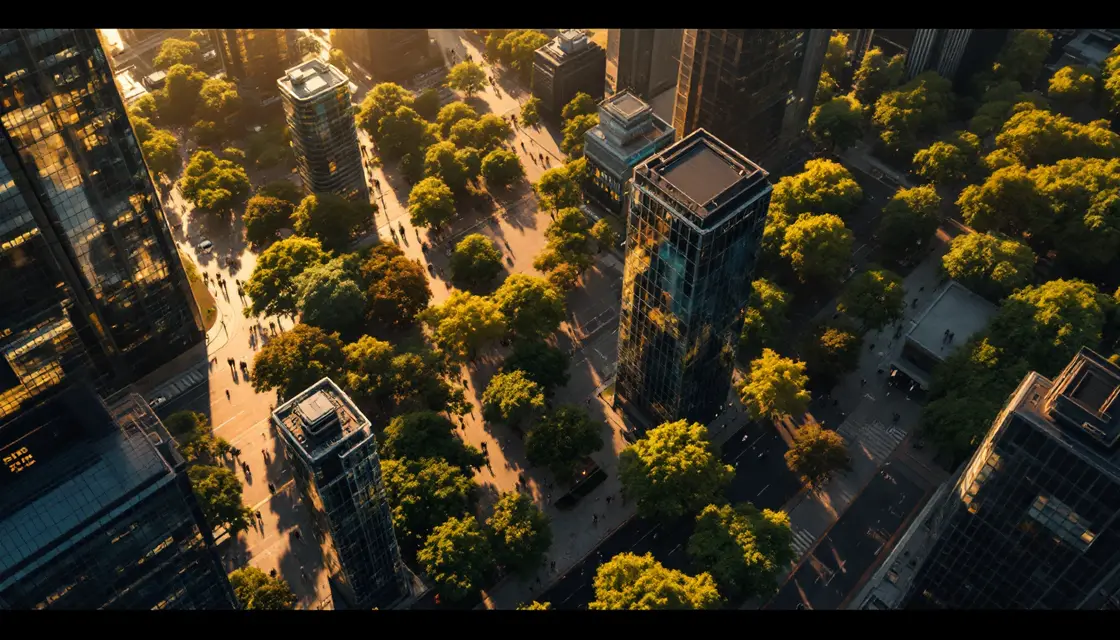
The working core is Sandton Central, the dense cluster around Sandton City, Nelson Mandela Square and the Sandton Convention Centre. This is where the towers, the hotels and the head offices concentrate, and where the Gautrain surfaces.
Around that core the precinct loosens quickly into tree-lined residential streets, older office parks and public green space. The contrast is the whole point: a few minutes’ walk takes you from a corporate lobby to a landscaped square, and that walkability is what the share-price version of Sandton leaves out.
How to read it
Most coverage of Sandton picks one lens and stays there: the investor’s yield, or the lifestyle magazine’s rooftop bar. The precinct makes more sense held in both hands at once.
- If you are deciding where to work, the question is whether the precinct beats the spare room. We make that case in Why work from Sandton.
- If you only know the towers, the green side of Sandton is the half that makes the rest liveable.
- If the buildings themselves are the draw, start with the architecture.
Everything else we publish sits somewhere between those two readings. That is deliberate. Property and precinct are not two subjects. They are one place, read twice.
Common questions
Where is Sandton?
Sandton is a business and residential node in the north of Johannesburg, Gauteng, about 15 km from the old city centre. It is served directly by the Gautrain at Sandton station.
Why is Sandton called Africa's financial capital?
The Johannesburg Stock Exchange moved to Sandton in 2000, and most of South Africa's large banks and corporates now base their head offices in or around the Sandton Central business district, which concentrated financial activity in the node.
Is Sandton a city of its own?
No. It is a node within the City of Johannesburg metropolitan municipality, not a separate city, though it functions as the commercial heart of the metro.
Sources
- The Leonardo building height and completion, Wikipedia