
History
How Sandton Took the Money From Downtown Joburg
The Johannesburg Stock Exchange left the inner city for Sandton in 2000, and the banks followed. The story of how the money moved north, and why.
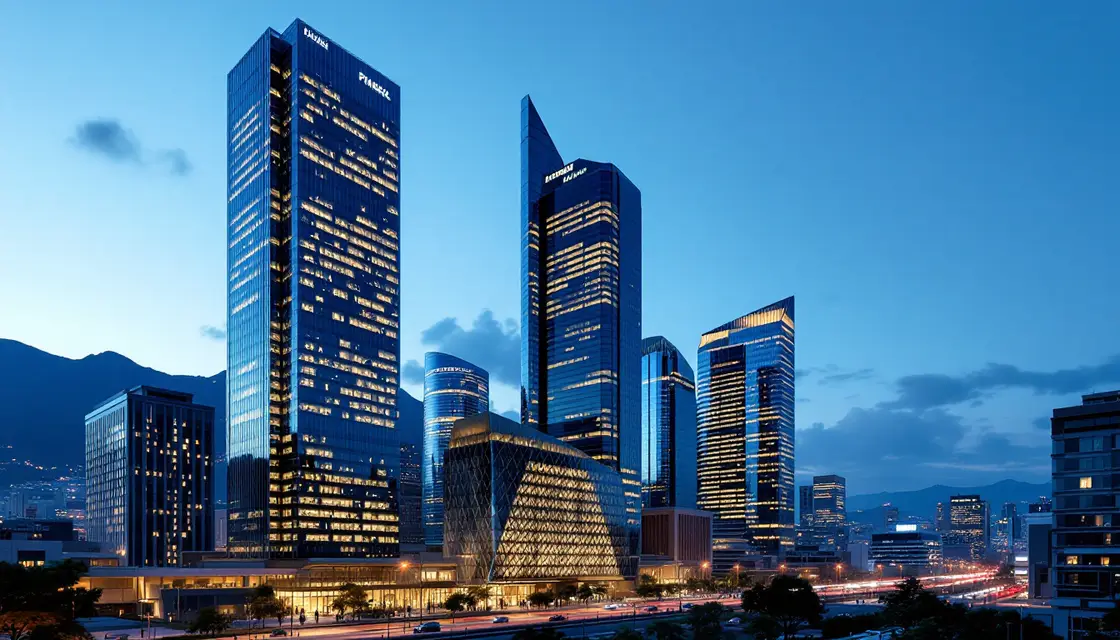
A financial capital is not announced, it accretes, and then one move makes it official. For Sandton that move came in 2000, when the Johannesburg Stock Exchange left its long-time home in the inner city and reopened in the north. The exchange did not just change address. It moved the centre of gravity of South African business, and the precinct we know today is the result.
The inner city that was
For most of the twentieth century the money sat downtown. The exchange traded around Diagonal Street, the banks kept their head offices in the central business district, and the Johannesburg CBD was the obvious and only address for serious commerce.
Through the 1990s that unravelled. Corporates grew uneasy about congestion, about ageing office stock, and about safety, and they began decentralising to the leafier nodes spreading north of the city. One node had a head start.
Why Sandton won
Sandton already had a commercial anchor. Sandton City had opened in 1973 and pulled retail, offices and hotels into a cluster that was dense enough to feel like a centre and new enough to avoid the inner city’s problems. When companies went looking for somewhere to move, Sandton was the ready-made answer.
The JSE’s relocation in 2000 turned a trend into a verdict. If the exchange itself was in Sandton, that was where the financial sector needed to be, and the banks and the corporates followed their market. Within a decade the node had replaced downtown as the country’s business address.
What it left behind, and built
The move is not a clean triumph. It hollowed out parts of the old CBD, concentrating investment in the north and leaving the inner city to a long, uneven recovery. That is the honest other half of the story, and it is worth holding onto when Sandton is described as a pure success.
What Sandton built on the back of it is the precinct in front of you now: the towers, the head offices, the skyline you can read storey by storey, and the dense working core that makes the modern argument for working from Sandton possible at all. The money came north, and it built a city to sit in. For the fuller orientation, start with the precinct explained.
Common questions
When did the JSE move to Sandton?
The Johannesburg Stock Exchange relocated from the inner city to Sandton in 2000, leaving its old home around Diagonal Street in the central business district.
Why did businesses leave downtown Johannesburg?
Through the 1990s the inner city lost corporate tenants to decentralised nodes in the north, driven by concerns about congestion, safety and ageing office stock. Sandton, already home to Sandton City, became the main beneficiary.
Sources
- Johannesburg Stock Exchange history, Wikipedia
More from The Pulse
Food and culture
Lunch Under the Towers
How the precinct dines, from Nelson Mandela Square to the rooftops, without the tourist traps.

Working culture
Why Work From Sandton, Not From Home
The spare-room office won the lockdown and quietly stopped working. The honest case for the precinct.

Working culture
The Hybrid Work Network of the Precinct
How to work from the precinct without a lease: memberships, boardrooms, day passes and how to choose.